

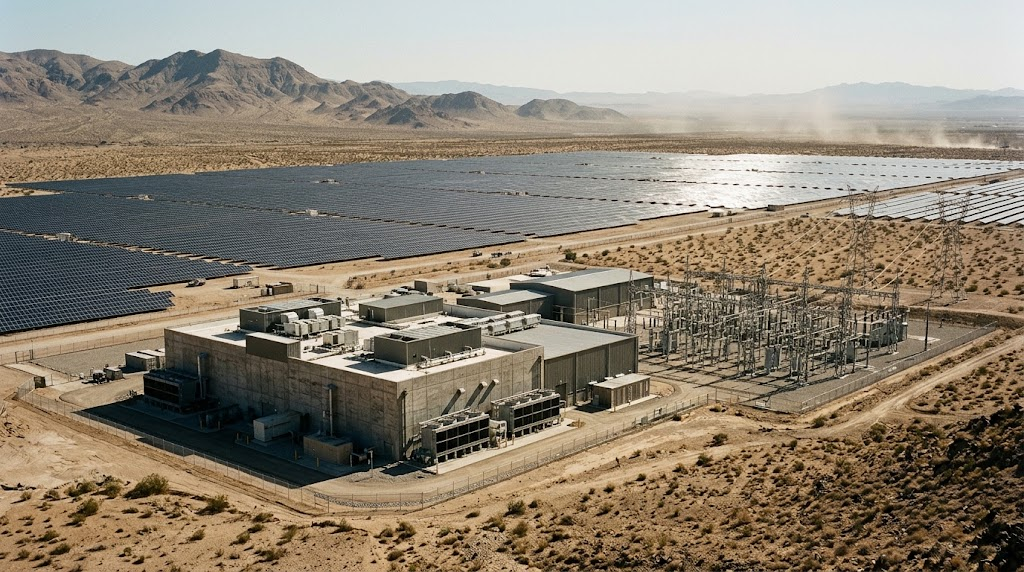
A lot is being written about data centers right now, so let me say where I stand: I am bullish on data centers.
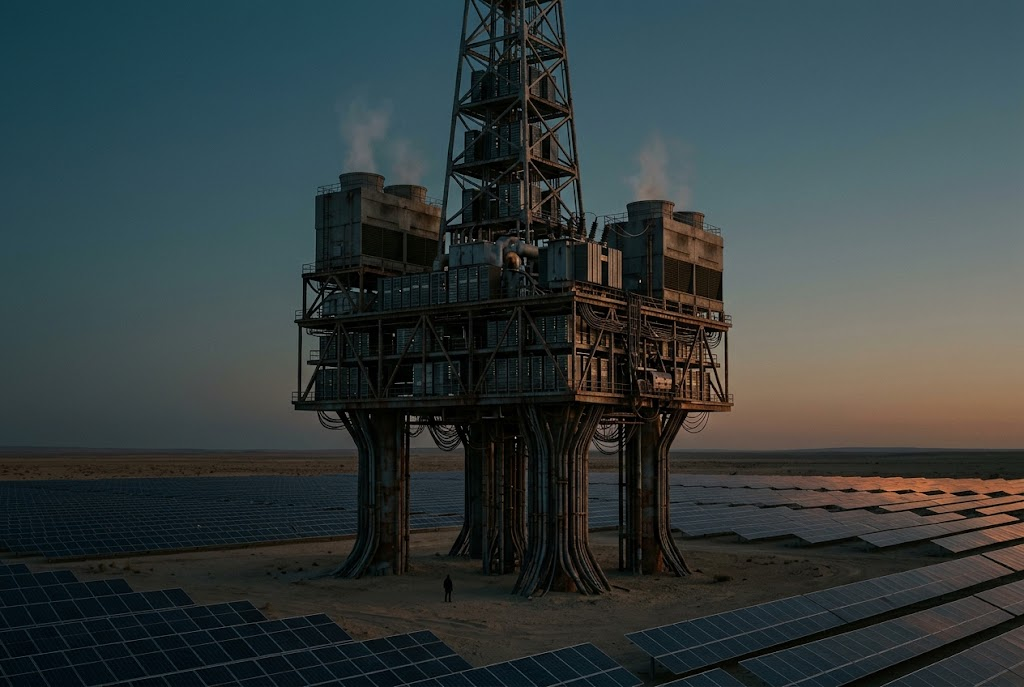
Does that mean you should buy the stocks? That data centers won't lose money? That they are "good" for us? That CoreWeave or OpenAI or Anthropic are great investments that have made no mistakes? No. I make none of those claims, and I don't make the counter-claims either. The claim is narrower and harder to argue with: data centers and chips are going to get built, at a scale we are not used to, and they will be the oil rigs of a shift that belongs on the timeline of the species, not of a product, election, economic or generational cycle.
Why it is inevitable
Almost every economically (and this qualifier is crucial) productive task we do has some role for AI in it now, physical or not: observe it, measure it, augment it, replace it, or make it faster, better, cheaper. Every one of those invocations needs a processor and needs energy. There are real economic efficiencies in centralizing at least some of that compute and power before it gets redistributed to the edges. Democratized in the physical sense, not only the financial one. That logic doesn't depend on who wins, or on whether today's prices are right, or on which party holds congress this cycle. Politics runs on a two-year clock on both sides of the aisle. This runs on a twenty-year one.
Some numbers
Data centers used about 1.5% of the world's electricity in 2024; the IEA's base case has that roughly doubling to just under 3% by 2030.1 Installed capacity forecasts for 2030 run from about 2x today's (JLL)2 to about 2.7x (Goldman, reportedly, this month),34 and the capex estimates to get there run from $3 trillion to nearly $7 trillion.5 Pick whichever forecaster you trust; none of them has it flat. My own view is that we are in the first few percent of what gets built over the next 20 years, in space, underwater, on rooftops, wherever there is power. Whether there are numbers or evidence for that yet or not, that is simply my opinion.
The people it will cost
The labor-market risk of this buildout is not a future risk; it is here, and it hurts. There will be replacement, and there will be new jobs we can't picture yet, and the old questions about who owns the means of production, about UBI (Universal Basic Income, i.e. you get paid to exist), about what we used to call socialism, are live again.
Most of us, had we been born then, would have been those starving and struggling people, not Ford.
I want to be precise about the history here, because the usual pro-technology reading of it is dishonest by omission. Whole generations died in mines and mills so that the industrial revolution could happen. People starved through the depressions of the 1920s and 30s, and what we remember of those decades is Ford's production line. Ford made billions, everyone drives a car today, and the people who starved are dead. Most of us, had we been born then, would have been those starving and struggling people, not Ford. And humanity will still come out "better off", because the humanity that writes the books only ever includes the survivors and the winners.
China ran the same trade a century later. The export miracle was built on a migrant generation living in factory dormitories, kept out of the cities' schools and hospitals by the hukou system, and on the thirty-odd million state workers laid off in the late 1990s so the books would balance. And the generation before them, the seventeen million city kids Mao sent to the villages in 1968, got spent for nothing at all: schools shut for politics, then laid off in their forties when the factories were restructured. Nobody came for them either.13
So, the UBI. I just don't see who is paying for it in a heavily privatized society where almost everything you currently get paid for can be done, or soon will be done, better by an AI.
Don't take my word for that last part. Ask the 60,000 Microsoft employees, engineers included, who were handed the exit door last week,6 or the Googlers being handed the same door this week.7 Ask Dario Amodei, in his own words.8 Ask the mathematicians still reeling from OpenAI dropping, overnight in October, claimed proofs for 372 open problems, some of which had held out against the whole field for decades.9 Do you think your accounting degree gives you unique knowledge or skills that AI doesn't fetch in a second?
Back to who pays. Most governments cannot afford it, and the US is culturally among the least likely countries to offer its citizens a free and full lunch. A $200 cheque is nothing when your rent or gas bill goes up $500 a year, and your unborn children will pay for that cheque, because it was written to win an election, not to solve anything. There is no safety net. I pray we find quickly what our new role and economic value is in a world that doesn't need us for work. On the one hand, it sounds like a dream. On the other, your rent is still due.

Do I want it this way? No.
Do I think it is a good thing? Probably no (but I'm not here to tell you or speculate whether it's good or bad).
Will it be this way? Probably yes.
It has always been this way, and I don't see what is different this time.
For what it's worth, Ford also created a lot of jobs. The generations after the people who starved did benefit, and the data center and AI buildout will pay out the same way.1415 The hard part is the transition, and landing it is nobody's job. Fierce competition is great for speed and progress. It is trash for equity.
Companies and governments
Before 1920, in large parts of the world, if you didn't like the old fart who proclaimed himself king, you could simply walk over to the next patch of grass. Imagine that.
The state as the top of the structure is a younger idea than it looks. The idea that a government is sovereign over a patch of land and answers to nobody above it dates to Westphalia in 1648.10 The machinery that made it bind on an ordinary person, the passport and the border post, dates to the First World War and the 1920 conference that standardized them.10 Before 1920, in large parts of the world, if you didn't like the old fart who proclaimed himself king, you could simply walk over to the next patch of grass. Imagine that. The state became a real, binding thing only about a century ago, and, by the standard definition, it got the top seat for one reason. Max Weber's definition of a state, from 1919, is the body that holds a monopoly on legitimate violence inside a territory.11 The definition says nothing about solving anything.
When 4 or 5% of the world's population elects you and finances you, you are structurally not built for problems that are global: pollution, warming, supply chains, the supply of chips, the price of intelligence. The United States is 340 million people, about 4% of the planet. All of the EU is about 450 million, about 5.5%. Google touches two to three billion.12 A taxpayer base of 4% of humanity deciding the shape of the world's energy, compute and climate has been the arrangement so far. I would not bet on it staying the default. It is also morally strange, and we have stopped noticing. Is a Swiss life worth more than a Mongolian or a Chilean one? Nobody would say so out loud, and the whole system runs as if it were. A company that sells knowledge or retail access to anyone with a phone, regardless of passport, is doing something no government is built to do, and I'd argue it is doing more for humanity as a whole than the government that taxes it. The UN was built for these problems and has been gutted; so the work gets done by whoever operates at the scale of the problem, and today that is a handful of companies and the enterprising, socially motivated people around them, not whoever keeps a finger on the nuclear codes and taxes air and existence.
So whether a central government, with its archaic tax system, unbalanced books and debt spirals, built on the banking and governance structures entrenched over the hundred years since the two world wars, can "underwrite" an Anthropic, an Adani, or a TSMC12 is almost a moot question. It probably can't (or maybe it can), but in the grander scheme of things it probably doesn't matter. The organization of these frontier AI companies (the structure, not any specific company in particular) is now more relevant to what happens next for humanity than what central governments have been and what they can do.
Dollars are a trailing indicator
Which is also why measuring this in dollars or yen misreads it. What is moving is goods, services, energy and the physical capacity to do work, and the price tags and financing structures hide the civilizational scale of that. The dollars are a massively trailing indicator, administered by structures that were not built for the thing they are now measuring. Nobody today cares what a galleon cost in gold or what a scroll cost in denarii. The ships and the paper stayed. The currencies, and most of the governments that administered them, did not.
Where that leaves me
These stocks will flip-flop 10-30% (or even more) in the coming years. Some chip, AI, data center and energy companies will fold: badly run, or badly financed, or mistimed, or just unlucky. Governments will change. None of that is evidence against the thesis. What would change my mind is different: two straight years of flat total compute consumption, or inference moving onto the device faster than it moves into the cloud. Watch those two numbers, not the share prices. None of this makes me anti-environment either, or in favor of a lower quality of life; quite the opposite. Well financed or poorly financed, overpriced or underpriced today, good or bad for us, solar powered or "coal guzzling", the data centers are here to stay.
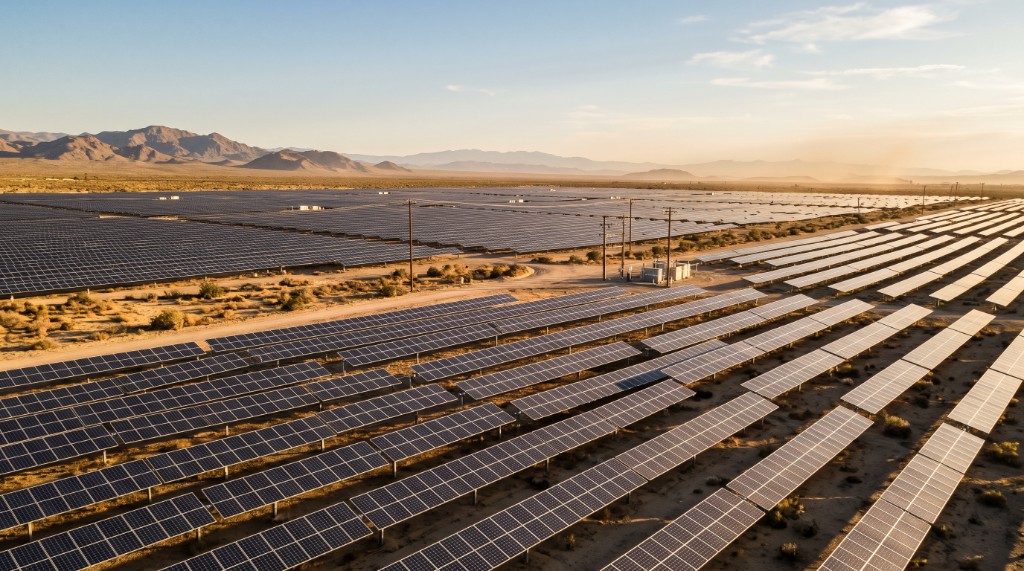
One disclosure. I am working on a data center project in India, so I have a stake in being right about this. For what it's worth, we are aiming to run it on untapped solar in one of the hottest regions on earth. Discount accordingly.
Am I missing anything?
Sources
- IEA, Energy and AI (April 2025): data centres ~415 TWh in 2024 (~1.5% of global electricity), base case ~945 TWh in 2030 (just under 3%). sustainabilityonline.net and scientificamerican.com
- JLL, 2026 Global Data Center Outlook: 103 GW to 200 GW by 2030, 14% CAGR, ~$3 trillion for ~100 GW of new supply. jll.com
- Goldman Sachs Global Investment Research, ~273 GW by 2030, as circulated Nov 3 2026 (secondary). fourweekmba.com
- Median of nine published 2030 capacity forecasts, ~217 GW (range 173-301 GW), Shanu Mathew compilation, Oct 23 2026. fourweekmba.com
- McKinsey, ~$6.7 trillion data center capex needed by 2030 (cited secondhand). blog.mean.ceo
- Microsoft voluntary exit offer to ~60,000 of ~223,000 employees, late Oct 2026. informationweek.com and ad-hoc-news.de
- Google expands voluntary exit packages to five countries (Reuters, Nov 4 2026); big-tech layoffs and buyouts top 100,000 in 2026. americanbazaaronline.com and 247wallst.com
- Dario Amodei with Nikhil Kamath, "The AI Tsunami is Here & Society Isn't Ready," People by WTF, Feb 24 2026. youtube.com
- OpenAI mathematics release, Oct 6-7 2026: 722 preprints, 372 results, 3 withdrawn, 14 revised, 300 formalized in Lean. science.org, washingtonpost.com and theconversation.com
- Westphalia: the Peace of Westphalia (1648) as the conventional origin of territorial sovereignty; for the caveat that this reading is partly a later retrofit, Andreas Osiander, "Sovereignty, International Relations, and the Westphalian Myth," International Organization 55(2), 2001. Passports: 1914 wartime controls made permanent; League of Nations Paris Conference on Passports, Customs Formalities and Through Tickets, Oct 15-21 1920. qz.com and doughboy.org
- Max Weber, "Politics as a Vocation" (Politik als Beruf), lecture delivered in Munich, January 1919: the state as the human community that successfully claims the monopoly of the legitimate use of physical force within a given territory. Any standard edition; the Gerth and Mills translation in From Max Weber (1946) is the usual English cite. Companion reading on how states got there: Charles Tilly, "War Making and State Making as Organized Crime," in Evans, Rueschemeyer and Skocpol (eds), Bringing the State Back In, Cambridge University Press, 1985; and Tilly, Coercion, Capital, and European States, AD 990-1990, Blackwell, 1990.
- US population ~340 million (Census Bureau estimate, 2024-25); EU ~450 million (Eurostat, 2024); world ~8.2 billion (UN), so the US is ~4% and the EU ~5.5%. Google's own figure is "over 2 billion" users across its services; Android exceeds 3 billion active devices. TSMC: market value above $1 trillion against Taiwan's GDP of roughly $800 billion. Adani: the 2023 Hindenburg episode exposed LIC and state-bank holdings.
- China: migrant workers ~290 million by 2019 (National Bureau of Statistics); hukou household registration ties schooling and healthcare to a registered home district; state-enterprise layoffs (xiagang) of roughly 30-45 million workers between about 1995 and 2002; sent-down youth (zhiqing) ~17 million urban young people sent to the countryside 1968-1980, many later among the "4050" layoff cohort of the late 1990s (Michel Bonnin, The Lost Generation, Chinese University Press, 2013).
- Robert C. Allen, "Engels' pause: technical change, capital accumulation, and inequality in the British Industrial Revolution," Explorations in Economic History 46(4), 2009: output per worker rose from roughly 1790 to 1840 while real wages stayed flat; wages caught up only afterwards.
- David Autor, Caroline Chin, Anna M. Salomons and Bryan Seegmiller, "New Frontiers: The Origins and Content of New Work, 1940-2018," NBER Working Paper 30389 (2022); Quarterly Journal of Economics (2024): most of the jobs held in 2018 had titles that did not exist in 1940. Ford's $5 day: announced January 1914, roughly doubling the prevailing wage, adopted to cut turnover.